
The Eradication of Smallpox: Humanity's First Global Victory Over Disease
A coordinated global campaign spanning decades led to the unprecedented eradication of smallpox, a disease that had plagued humanity for millennia. This monumental achievement saved countless lives and set a blueprint for future public health endeavors.
The disease of smallpox, a plague that had stalked humanity for at least 3,000 years, was declared eradicated in 1980 – the first and only human infectious disease ever eliminated globally. This victory was not the result of a single breakthrough but a relentless, coordinated effort involving hundreds of thousands of people across dozens of nations, stopping a killer responsible for hundreds of millions of deaths.
Smallpox, caused by the variola virus, was a fearsome adversary. It manifested with a severe rash, high fever, and often left survivors disfigured with deep scars, blinded, or sterile. Its mortality rate was roughly 30%, but in some outbreaks, it could be far higher. For millennia, it ripped through populations, wiping out entire communities, especially after first contact with isolated peoples. Civilizations rose and fell under its shadow, and it shaped human history profoundly, killing three to five hundred million people in the 20th century alone before its eradication. To put that scale into perspective, it killed more people than all wars combined during that century.
The Long Road to Control
The journey to defeat smallpox began not with a cure, but with observation. In 1796, Edward Jenner, an English physician, noticed that milkmaids who contracted cowpox, a milder disease, seemed immune to smallpox. He famously inoculated James Phipps, an eight-year-old boy, with material from a cowpox lesion. Phipps developed mild symptoms but recovered, and when later exposed to smallpox, he remained healthy. This act, groundbreaking and controversial for its time, birthed the concept of vaccination, a term derived from *vacca*, the Latin word for cow. For the next century and a half, vaccination spread slowly, reducing the disease's toll in some areas, but true global eradication remained a distant dream.
The real push came in the mid-20th century. In 1959, the World Health Organization (WHO) launched a global eradication program, initially slow and underfunded. It was reinvigorated in 1967 as the Intensified Eradication Program, led by Dr. D.A. Henderson, an American epidemiologist. This campaign was massive in scope, aiming to vaccinate every person in every country where the disease was endemic. It was a logistical challenge on an unprecedented scale, requiring millions of doses of stable vaccine, thousands of vehicles, and an army of dedicated health workers.
The Hardest Miles
The hardest part of the campaign was not developing the vaccine, but delivering it to every remote village and urban slum, especially in areas with limited infrastructure, civil unrest, or cultural barriers. The problem of maintaining the vaccine's potency, which required refrigeration (a "cold chain"), was solved with heat-stable vaccines and innovative deployment methods. Identifying outbreaks quickly and then containing them became crucial. The strategy shifted from mass vaccination to "ring vaccination": identifying a case, then vaccinating everyone in the immediate vicinity and all their contacts, effectively creating a firebreak around the infection.
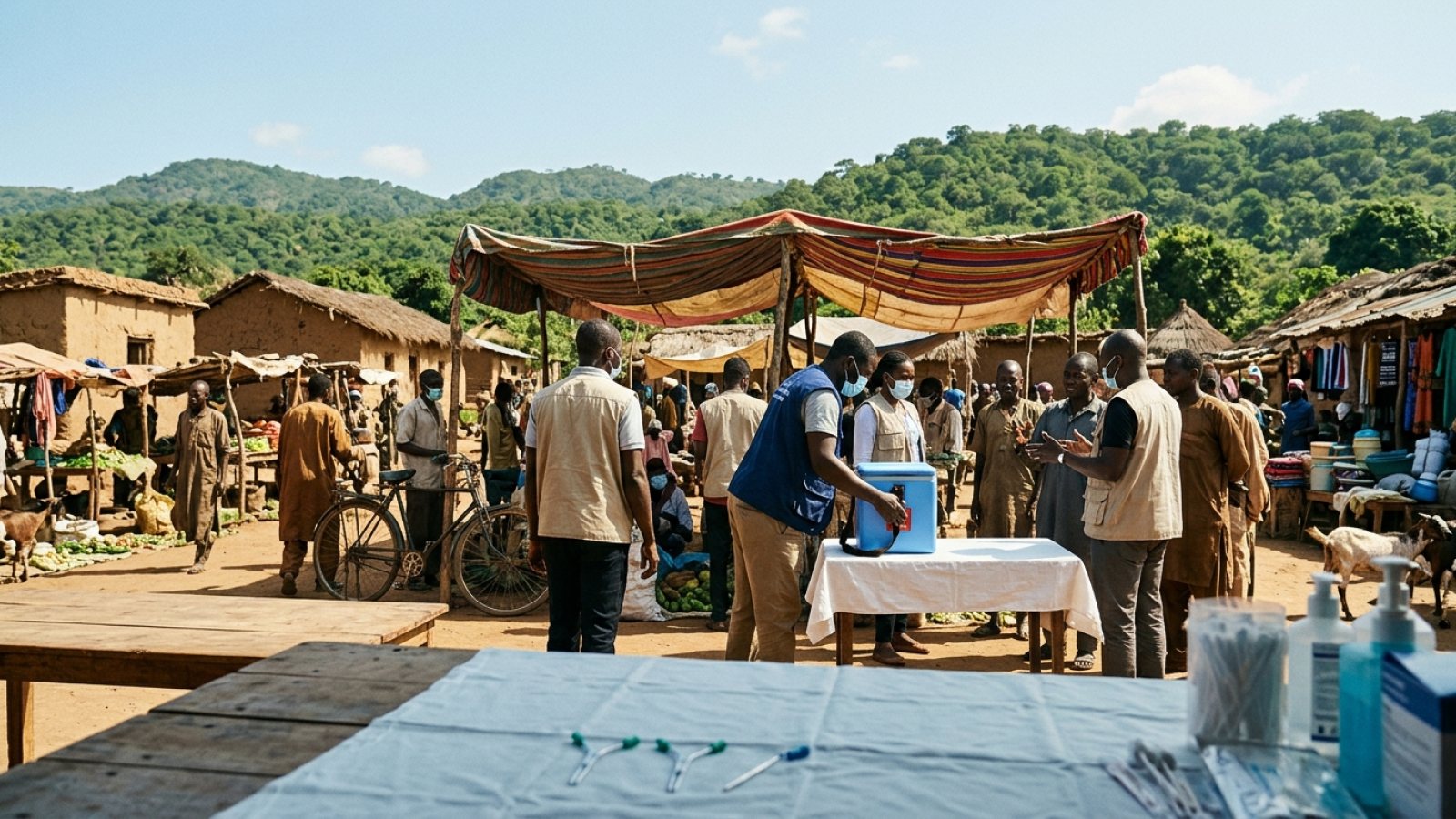
Hundreds of thousands of people, from doctors and scientists to local health aides and volunteers, joined the effort. They walked countless miles, often through difficult terrain, carrying vaccine boxes and bifurcated needles – a simple, effective tool designed to deliver a precise, small dose. They knocked on doors, set up clinics in markets, and educated communities about the disease and the vaccine. For many, this work was dangerous, physically demanding, and far from home. The commitment of these foot soldiers of public health was the human engine of eradication.
A Permanent Legacy
The cost of the Intensified Eradication Program was estimated at about $300 million over ten years (equivalent to roughly $2.4 billion in today's money), with contributions from many nations. This figure, though substantial, pales in comparison to the billions saved annually by no longer needing to treat smallpox cases or vaccinate against it, not to mention the immeasurable value of lives saved and suffering prevented. The last naturally occurring case of smallpox was recorded in Somalia in October 1977, in a hospital cook named Ali Maow Maalin. He recovered, and the virus, robbed of new hosts, died out.
On May 8, 1980, the 33rd World Health Assembly declared smallpox eradicated. Humanity had achieved something truly extraordinary: it had systematically hunted down and eliminated a devastating disease that had plagued it since antiquity. The lessons learned from the smallpox campaign – from surveillance strategies and logistical planning to community engagement and global coordination – profoundly shaped subsequent public health initiatives, including efforts to eradicate polio and guinea worm disease. Today, the variola virus exists officially only in two high-security laboratories, one in the United States and one in Russia, a potent reminder of both a monumental achievement and a potential threat. The eradication of smallpox stands as a testament to what is possible when the world unites against a common enemy, demonstrating the immense power of human ingenuity and collaborative will.
