The Channel Tunnel: Britain and France Joined Under the Sea
For centuries, the English Channel was a formidable barrier; today, two nations are linked by a subterranean artery. The Channel Tunnel, a colossal feat of engineering, runs 50 kilometres beneath the waves, a testament to shared ambition and relentless effort.
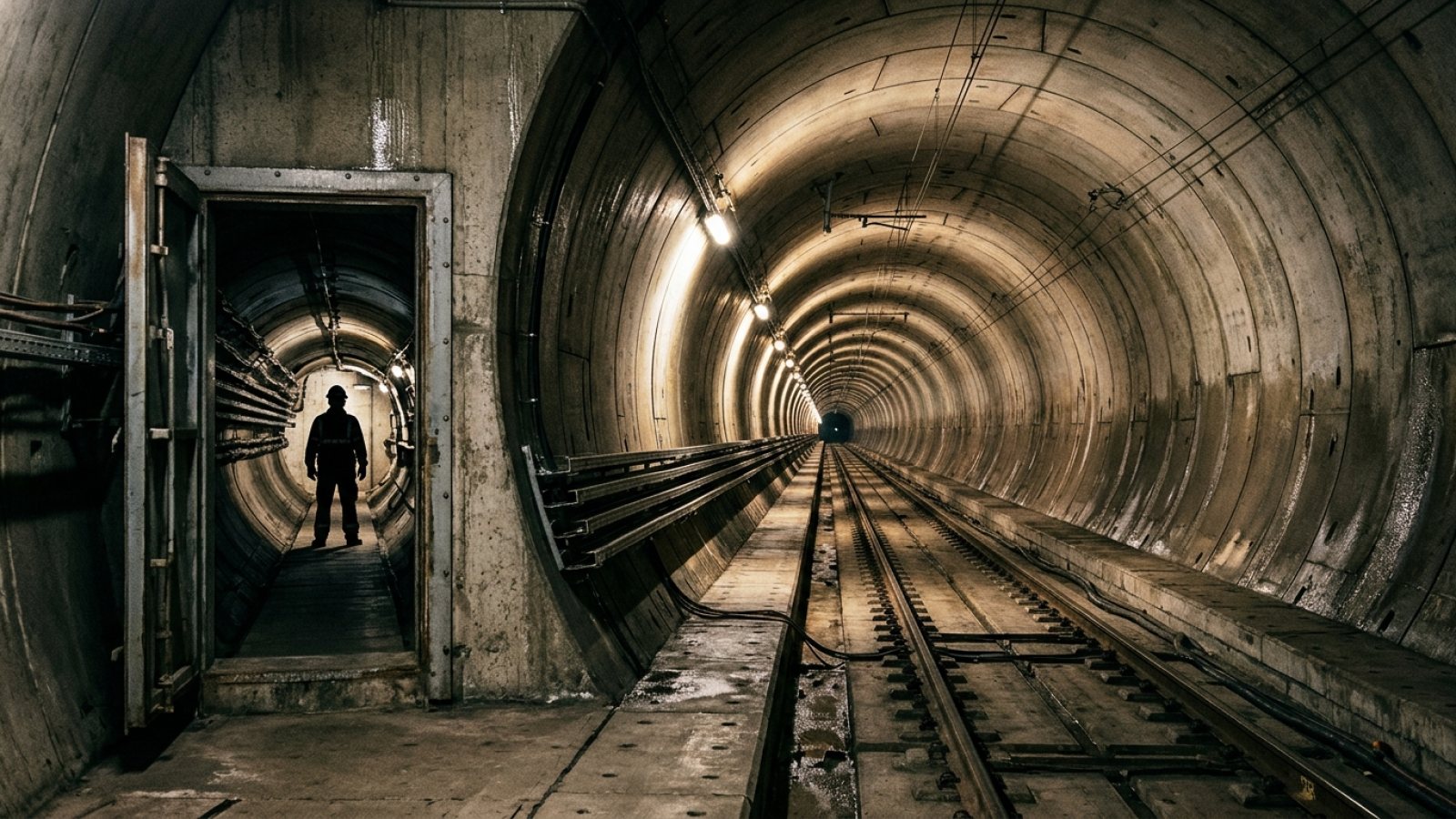
For thousands of years, the English Channel guarded Britain, a natural moat securing its island status while often hindering its connection to mainland Europe. Yet, for just as long, the dream of a fixed link persisted: a bridge, a tunnel, anything to bridge the formidable 34-kilometre gap between Folkestone and Calais. That dream became concrete reality with the Channel Tunnel, a twin-bore rail tunnel and a central service tunnel, stretching 50.45 kilometres, with 37.9 kilometres running beneath the seabed.
A Century of Dreams and Digging
The idea of an undersea connection between Britain and France dates back to 1802, when French mining engineer Albert Mathieu-Favier proposed a tunnel lit by oil lamps and traversed by horse-drawn carriages. Over the next two centuries, numerous proposals, parliamentary bills, and even some preliminary digging efforts failed, often halted by political tensions, financial collapse, or public fear of invasion. Each time, the sheer scale of the engineering challenge seemed insurmountable, and the political will too fragile.
It was not until the 1980s, driven by Margaret Thatcher and François Mitterrand, that the project finally gained irreversible momentum. The two leaders agreed on a privately financed, rail-only link. A consortium of five construction companies from each nation, known as TransManche Link, was formed to build the tunnel, while Eurotunnel was established to secure financing and operate the completed infrastructure. The vision was immense: a project that would require billions of pounds and thousands of workers, digging from both sides of the Channel, hoping to meet with unprecedented precision.
Blasting Through the Blue Chalk
Construction began in December 1987, and for the next six years, the Channel Tunnel became the largest civil engineering project in Europe. Eleven massive Tunnel Boring Machines (TBMs) – five on the British side, six on the French – relentlessly chewed through the chalk marl beneath the seabed. Each TBM was a moving factory, 200 metres long and weighing 1,100 tonnes, capable of excavating, removing spoil, and lining the tunnel with concrete segments simultaneously. Roughly 8 million cubic metres of spoil, mostly chalk, were excavated – enough material to fill Wembley Stadium eight times over.
The geological strata, particularly the relatively impermeable chalk marl layer, offered the best conditions for tunnelling, but challenges were constant. Water ingress from the porous strata above was a persistent threat, requiring sophisticated ground treatment and drainage systems. The accuracy required was astounding: digging from two points, 50 kilometres apart, with a target meeting point under the sea. Using advanced laser guidance systems and surveying techniques, the two teams met with a horizontal deviation of only 36.2 centimetres and a vertical deviation of 5.8 centimetres. On December 1, 1990, British and French workers broke through the final section of the service tunnel, shaking hands through the small opening in a widely broadcast moment of historic triumph.
Over 13,000 workers were involved at the peak of construction, toiling in challenging conditions often hundreds of feet below the surface. The work was dangerous, and the project exacted a tragic human cost: ten workers lost their lives during construction.
An Uneasy Union, A Lasting Legacy
The Channel Tunnel was inaugurated on May 6, 1994, by Queen Elizabeth II and President Mitterrand. Its final cost was approximately £9 billion (in 1994 prices), significantly over its initial budget. Despite the financial overruns and the inherent difficulties of such a vast international undertaking, the tunnel has fundamentally reshaped connections between Britain and continental Europe.
Today, the Eurostar high-speed passenger trains carry millions of people annually between London, Paris, Brussels, and Amsterdam in a fraction of the time it once took by ferry or air. Le Shuttle freight and vehicle services transport millions more, proving the tunnel a vital economic artery. Beyond its functional role, the Channel Tunnel stands as a powerful symbol of collaboration, persistence, and human ingenuity – a monument carved from rock and ambition, binding two nations under the waves, an enduring example of what can be achieved when imagination meets engineering on an epic scale.
